Artiroom vs Runway vs Sora vs Kling: The Ultimate AI Video Comparison
By Camilo Villa, Founder, Artiroom. Published 2026-03-24. 11 min read.
A detailed head-to-head comparison of the four biggest AI video generators - Artiroom, Runway, Sora, and Kling - across every metric that matters for serious creators.
Artiroom vs Runway vs Sora vs Kling: The Ultimate AI Video Comparison
Four platforms dominate the AI video generation conversation in 2026: Artiroom, Runway, Sora, and Kling. Each has distinct strengths, and the "best" choice depends entirely on what you're trying to make. This comparison breaks down every meaningful dimension so you can make an informed decision.
In this guide:
- [Quick Comparison Table](quick-comparison-table)
- [Character Consistency](character-consistency)
- [Video Quality](video-quality)
- [Pricing Comparison](pricing-comparison)
- [Ease of Use](ease-of-use)
- [Content Moderation](content-moderation)
- [Multi-Scene and Storytelling Support](multi-scene-and-storytelling-support)
- [Output Formats and Technical Specs](output-formats-and-technical-specs)
- [Which Platform Wins?](which-platform-wins)
- [The Bottom Line](the-bottom-line)
---
Quick Comparison Table
> Key takeaway: Artiroom leads on character consistency and story pipeline; Runway and Sora lead on raw single-clip quality; Kling leads on price.
| Feature | Artiroom | Runway (Gen-3) | Sora | Kling |
|---------|----------|-----------------|------|-------|
| Character Consistency | Persistent identity profile (Visual DNA) | Reference image, per generation | None | Face lock (single subject) |
| Video Quality | High | Very High | Very High | High |
| Multi-Scene Support | Full timeline | Manual | None | Limited |
| Story Pipeline | Script → Storyboard → Video | No | No | No |
| Max Clip Duration | 10s | 10s | 20s | 10s |
| Output Resolution | 1080p HD (paid plans) | Up to 4K | Up to 1080p | Up to 1080p |
| Content Moderation | Moderate | Moderate | Strict | Variable |
| Starting Price | $9.99 one-time (Starter pack); subscriptions from $29.99/mo | $15/mo | $20/mo (ChatGPT+) | $8/mo |
| Best For | Storytelling & consistency | General video & editing | Photorealism | Budget-friendly quality |


---
Character Consistency
> Key takeaway: Character consistency is the defining differentiator - Artiroom stores a reusable identity profile, while the others offer either nothing or a single-shot face lock, which is what multi-scene storytelling depends on.
This is the defining differentiator. If your project involves a character appearing in more than one scene - which includes virtually all storytelling - character consistency is non-negotiable.
Artiroom: Visual DNA (persistent identity profile)
Artiroom's Visual DNA system was purpose-built for this problem. It analyzes 40+ visual attributes per character and preserves them as generation constraints across every scene. Characters maintain their exact facial features, body proportions, clothing details, and distinguishing marks regardless of camera angle, lighting, or environment.
The system requires no training time - you define a character once (via reference images, text description, or the attribute editor) and the Visual DNA profile persists across every scene. This architectural approach means consistency isn't a feature bolted onto the pipeline; it's the foundation of the generation process.
[Deep dive into how Visual DNA works](/blog/what-is-visual-dna-ai-video)
Runway: No Native Solution (reference image per generation)
Runway Gen-3 Alpha Turbo generates each clip independently. There is no built-in character consistency mechanism. Users attempt workarounds: using the same reference image, careful prompt engineering, and manual seed selection. These approaches produce roughly consistent results in some cases but break down with pose changes, angle shifts, or environmental differences.
The lack of native character consistency is the most frequent complaint in Runway reviews. As of early 2026, the platform maintains a 2.5 out of 5 average on Trustpilot, with identity inconsistency cited repeatedly.
Sora: No Multi-Scene Identity
Sora generates exceptional individual clips - possibly the most realistic single-shot output available. But it offers zero mechanism for maintaining character identity across separate generations. Each clip is a standalone creation. For storytelling purposes, this means you cannot reliably produce two scenes with the same character.
OpenAI has not announced plans for character consistency features, though the feature is widely requested.
Kling: Face Lock (single subject)
Kling offers a Face Lock feature that provides basic identity preservation by anchoring facial features to a reference image. It works reasonably well for front-facing, well-lit scenarios with minimal pose variation. However, performance degrades significantly with:
- Profile or three-quarter views
- Dramatic lighting changes
- Different outfits or accessories
- Full-body consistency (Face Lock only handles faces)
Kling's approach is better than nothing but far from reliable for multi-scene storytelling.
[Read our complete guide to character consistency challenges and solutions](/blog/ai-character-consistency-complete-guide)
---
Video Quality
> Key takeaway: Sora and Runway produce the most photorealistic single clips, while Artiroom prioritizes visual detail that serves character consistency - all four platforms deliver impressive output.
Motion Smoothness
- Sora leads in natural motion. Characters move with convincing weight and physics. Walking, turning, and gesturing look remarkably human.
- Runway is close behind, with Gen-3 Alpha Turbo producing smooth, artifact-free motion in most scenarios.
- Artiroom produces high-quality motion that prioritizes consistency over raw cinematic flair. Motion is clean and coherent.
- Kling produces good motion with occasional temporal artifacts - brief moments where the motion stutters or warps.
Visual Fidelity
All four platforms produce visually impressive output, but there are differences:
- Sora and Runway produce the most photorealistic individual clips, with fine detail in textures, reflections, and environmental elements.
- Artiroom produces high-fidelity output with particularly strong performance in maintaining visual detail that serves character consistency - skin texture, fabric weave, and accessory detail are preserved precisely.
- Kling produces clean, attractive output that occasionally lacks the fine-grain detail of Runway or Sora.
Artifact Frequency
- Sora: Very rare in short clips; occasional in longer generations
- Runway: Rare; primarily in complex multi-character scenes
- Artiroom: Rare; consistency constraints help reduce cross-frame artifacts
- Kling: Occasional; more frequent in fast-motion scenes
---
Pricing Comparison
> Key takeaway: The real cost isn't the subscription price - it's the re-generation cost. Users report spending 5-10x more credits on Runway and Sora trying to brute-force character consistency.
| Plan | Artiroom | Runway | Sora | Kling |
|------|----------|--------|------|-------|
| Free Tier | Yes (10 credits to start, one 480p scene video of up to 5 seconds) | Yes (limited) | No | Yes (daily limits) |
| Entry Paid | $9.99 one-time (Starter pack) or $29.99/mo (Creator) | $15/mo (Standard) | $20/mo (ChatGPT Plus) | $8/mo (Pro) |
| Mid Tier | $99.99/mo (Studio) | $35/mo (Pro) | $200/mo (ChatGPT Pro) | $28/mo (Premium) |
| High Tier | $299.99/mo (Agency) | $95/mo (Unlimited) | N/A | N/A |
Value Analysis
Kling is the cheapest entry point at $8/month, but you get limited consistency and lower resolution. Runway at $15/month gives you excellent single-clip quality but no storytelling tools. Sora at $20/month (via ChatGPT Plus) gives limited generations of the highest-quality single clips. Artiroom starts with a $9.99 one-time Starter pack; its subscriptions start at $29.99/month, the highest monthly entry price of the four, and it is the only option that solves character consistency.
The real cost comparison isn't the subscription price - it's the cost of re-generation. When characters don't look consistent, you regenerate scenes repeatedly trying to get acceptable results. Users report spending 5-10x more credits on Runway and Sora to achieve passable consistency through brute force.

---
Ease of Use
> Key takeaway: Artiroom is built around a filmmaking workflow (30-60 minutes to learn), Runway offers a creative suite approach, Sora is minimalist, and Kling is functional but less polished.
Artiroom
Artiroom is designed around a filmmaking workflow: define characters, set visual style, write scenes, generate storyboard, produce video, assemble in timeline. This is intuitive for anyone who thinks in terms of stories and characters. The learning curve is in understanding the workflow (30-60 minutes); the individual steps are straightforward.
Runway
Runway offers a creative suite approach with multiple tools: text-to-video, image-to-video, motion brush, inpainting, outpainting. This flexibility is powerful but requires learning each tool's capabilities and limitations. The interface is polished and well-documented.
Sora
Sora's interface is minimalist - essentially a text prompt box with basic settings. This makes it extremely accessible for first-time users but limiting for creators who need precise control. The integration with ChatGPT means natural language instructions work well.
Kling
Kling's interface is functional but less polished than Western competitors. Some features are better documented in Chinese than English. The generation workflow is straightforward: upload a reference, write a prompt, generate.
---
Content Moderation
> Key takeaway: Sora's strict moderation limits dramatic storytelling; Runway and Artiroom strike a moderate balance; Kling's moderation is unpredictable.
Content moderation policies affect what you can create:
- Sora has the strictest moderation. It blocks violence, sexual content, and many stylistic choices that it classifies as potentially harmful. This limits its use for dramatic storytelling, horror, action, and some artistic expression.
- Runway and Artiroom apply moderate content policies that allow creative storytelling including dramatic tension and mild stylized violence, while blocking explicit content.
- Kling has variable moderation that sometimes blocks unexpected content while allowing other content that Western platforms would restrict.
For filmmakers, content moderation is a practical concern. If your story involves conflict, tension, or any mature themes, overly strict moderation can make production impossible.
---
Multi-Scene and Storytelling Support
> Key takeaway: Artiroom offers a complete production pipeline from script to export; Runway and Kling require external tools for assembly; Sora has no multi-scene capability at all.
This is where the platforms diverge most dramatically:
Artiroom: Full Story Pipeline
- Script input with automatic scene segmentation
- Character assignment per scene using Visual DNA profiles
- Storyboard generation and review
- Video generation with per-scene consistency
- Timeline editor for assembly and sequencing
- Drag-and-drop scene reordering
This is a complete production pipeline. You can go from idea to exported film within a single platform.
[See our step-by-step tutorial for using this pipeline](/blog/how-to-create-ai-short-film)
Runway: Clip-by-Clip
Runway generates individual clips. Assembling a multi-scene project requires generating clips separately and editing them together in an external tool (Premiere, DaVinci, etc.). There is no native concept of a "project" with multiple scenes.
Sora: Single Clips Only
Sora generates single clips up to 20 seconds. There is no multi-scene, timeline, or project functionality. Each generation is completely independent.
Kling: Basic Multi-Clip
Kling allows generating multiple clips from a project page, and Face Lock provides basic identity continuity. But there's no timeline, no scene sequencing, and no storyboard functionality.
---
Output Formats and Technical Specs
| Spec | Artiroom | Runway | Sora | Kling |
|------|----------|--------|------|-------|
| Max Resolution | 1080p HD (paid plans) | 4K | 1080p | 1080p |
| Max Duration/Clip | 10s | 10s | 20s | 10s |
| Aspect Ratios | 16:9, 9:16, 1:1 | 16:9, 9:16, custom | 16:9, 9:16, 1:1 | 16:9, 9:16, 1:1 |
| Output Format | MP4 | MP4 | MP4 | MP4 |
| FPS | 24/30 | 24 | 24 | 30 |
| API Access | Coming soon | Yes | Yes (limited) | Yes |
---
Which Platform Wins?
> Key takeaway: There is no single "best" platform - Artiroom wins for storytelling, Runway for editing versatility, Sora for photorealism, and Kling for budget-conscious creators.
There is no single "best" platform - there is a best platform for your use case:
Choose Artiroom If:
- You're making short films, series, or brand content with recurring characters
- Character consistency is a requirement, not a nice-to-have
- You want a complete production pipeline from script to export
- You value time efficiency over raw single-clip quality
Choose Runway If:
- You need versatile video editing tools beyond generation
- You're making single-scene content where consistency isn't critical
- You want the largest community and most tutorials
- You need API access for programmatic workflows
Choose Sora If:
- You need the most photorealistic single clips available
- Your content doesn't require multi-scene consistency
- You're already in the ChatGPT ecosystem
- Your content fits within strict moderation policies
Choose Kling If:
- You're on a tight budget and need strong quality per dollar
- You need basic face consistency for simple projects
- You're making shorter content where slight inconsistencies are acceptable
---
The Bottom Line
> Summary: Artiroom is the only AI video platform in 2026 that solves character consistency architecturally via Visual DNA, making it the clear choice for multi-scene storytelling, while Runway and Sora excel at single-clip quality and Kling offers the best value - your choice depends on whether you need consistent characters across scenes.
The AI video market in 2026 has stratified. Runway, Sora, and Kling are excellent clip generators. They produce impressive isolated moments. Artiroom is a filmmaking platform. It produces coherent stories.
If you need one great shot, you have many options. If you need twenty great shots with the same character, the choice narrows considerably. That's not a limitation of the market - it's a reflection of where the technology has reached. Character consistency at scale is an architectural problem, and Artiroom is the platform that has solved it architecturally.
Frequently Asked Questions
Is Artiroom better than Runway for AI video?
Artiroom is better than Runway for multi-scene storytelling and character consistency, thanks to Visual DNA technology. Runway offers more versatile single-clip editing tools and a larger community. The best choice depends on whether you need consistent characters across scenes.
How does Sora compare to Artiroom?
Sora produces more photorealistic individual clips, but offers no character consistency or multi-scene support. Artiroom provides a complete filmmaking pipeline with Visual DNA for identity preservation. For single impressive shots, Sora wins; for storytelling, Artiroom wins.
Is Kling cheaper than Artiroom?
Yes. Kling starts at $8/month compared to Artiroom's $29.99/month. However, Kling lacks Visual DNA character consistency and a full story pipeline. The effective cost can be higher on Kling due to re-generation needed to achieve acceptable consistency.
Which AI video generator has the best character consistency?
Artiroom is the only one of the four that stores a reusable character identity. Visual DNA analyzes 40+ attributes once and applies them to every scene. Kling's Face Lock covers a single subject's face, Runway needs a reference image re-supplied per generation, and Sora has no cross-generation identity mechanism.
Can I use Runway and Artiroom together?
Yes. Some creators use Artiroom for character-consistent scene generation and Runway for post-processing effects like motion brush and inpainting. Export scenes from Artiroom's timeline and import them into Runway for additional editing.
Which AI video tool is best for YouTube content?
For YouTube content with recurring characters or series, Artiroom is the best choice due to character consistency and multi-scene support. For one-off visual effects clips or motion graphics, Runway's editing tools are well-suited. Kling works for budget-conscious creators.
Does Sora support multi-scene video generation?
No. As of March 2026, Sora generates individual clips up to 20 seconds with no multi-scene support, no timeline, and no character consistency across generations. Each clip is completely independent. Multi-scene storytelling requires an external editing tool.
RunwaySoraKling
Artiroom vs Runway vs Sora vs Kling: The Ultimate AI Video Comparison
A detailed head-to-head comparison of the four biggest AI video generators - Artiroom, Runway, Sora, and Kling - across every metric that matters for serious creators.
Camilo Villa|March 24, 2026|Updated October 7, 2026|11 min read
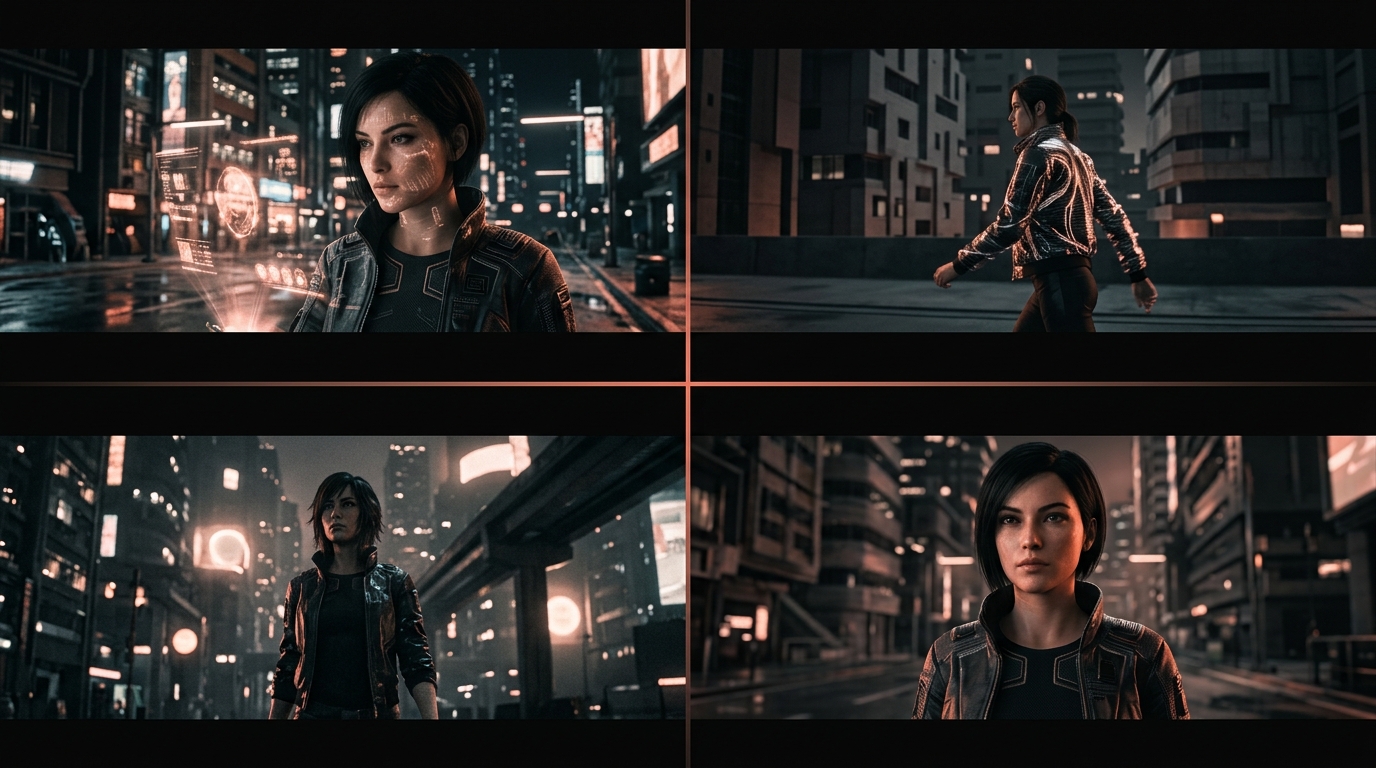
The same scene concept rendered by four different AI video generators
Artiroom vs Runway vs Sora vs Kling: The Ultimate AI Video Comparison
Four platforms dominate the AI video generation conversation in 2026: Artiroom, Runway, Sora, and Kling. Each has distinct strengths, and the "best" choice depends entirely on what you're trying to make. This comparison breaks down every meaningful dimension so you can make an informed decision.
Key takeaway: Artiroom leads on character consistency and story pipeline; Runway and Sora lead on raw single-clip quality; Kling leads on price.
| Feature | Artiroom | Runway (Gen-3) | Sora | Kling |
|---------|----------|-----------------|------|-------|
| Character Consistency | Persistent identity profile (Visual DNA) | Reference image, per generation | None | Face lock (single subject) |
| Video Quality | High | Very High | Very High | High |
| Multi-Scene Support | Full timeline | Manual | None | Limited |
| Story Pipeline | Script → Storyboard → Video | No | No | No |
| Max Clip Duration | 10s | 10s | 20s | 10s |
| Output Resolution | 1080p HD (paid plans) | Up to 4K | Up to 1080p | Up to 1080p |
| Content Moderation | Moderate | Moderate | Strict | Variable |
| Starting Price | $9.99 one-time (Starter pack); subscriptions from $29.99/mo | $15/mo | $20/mo (ChatGPT+) | $8/mo |
| Best For | Storytelling & consistency | General video & editing | Photorealism | Budget-friendly quality |
Visualization of feature comparison between AI video tools
Feature strength comparison across Artiroom, Runway, Sora, and Kling
Character Consistency
Key takeaway: Character consistency is the defining differentiator - Artiroom stores a reusable identity profile, while the others offer either nothing or a single-shot face lock, which is what multi-scene storytelling depends on.
This is the defining differentiator. If your project involves a character appearing in more than one scene - which includes virtually all storytelling - character consistency is non-negotiable.
Artiroom: Visual DNA (persistent identity profile)
Artiroom's Visual DNA system was purpose-built for this problem. It analyzes 40+ visual attributes per character and preserves them as generation constraints across every scene. Characters maintain their exact facial features, body proportions, clothing details, and distinguishing marks regardless of camera angle, lighting, or environment.
The system requires no training time - you define a character once (via reference images, text description, or the attribute editor) and the Visual DNA profile persists across every scene. This architectural approach means consistency isn't a feature bolted onto the pipeline; it's the foundation of the generation process.
Runway: No Native Solution (reference image per generation)
Runway Gen-3 Alpha Turbo generates each clip independently. There is no built-in character consistency mechanism. Users attempt workarounds: using the same reference image, careful prompt engineering, and manual seed selection. These approaches produce roughly consistent results in some cases but break down with pose changes, angle shifts, or environmental differences.
The lack of native character consistency is the most frequent complaint in Runway reviews. As of early 2026, the platform maintains a 2.5 out of 5 average on Trustpilot, with identity inconsistency cited repeatedly.
Sora: No Multi-Scene Identity
Sora generates exceptional individual clips - possibly the most realistic single-shot output available. But it offers zero mechanism for maintaining character identity across separate generations. Each clip is a standalone creation. For storytelling purposes, this means you cannot reliably produce two scenes with the same character.
OpenAI has not announced plans for character consistency features, though the feature is widely requested.
Kling: Face Lock (single subject)
Kling offers a Face Lock feature that provides basic identity preservation by anchoring facial features to a reference image. It works reasonably well for front-facing, well-lit scenarios with minimal pose variation. However, performance degrades significantly with:
Profile or three-quarter views
Dramatic lighting changes
Different outfits or accessories
Full-body consistency (Face Lock only handles faces)
Kling's approach is better than nothing but far from reliable for multi-scene storytelling.
Key takeaway: Sora and Runway produce the most photorealistic single clips, while Artiroom prioritizes visual detail that serves character consistency - all four platforms deliver impressive output.
Motion Smoothness
Sora leads in natural motion. Characters move with convincing weight and physics. Walking, turning, and gesturing look remarkably human.
Runway is close behind, with Gen-3 Alpha Turbo producing smooth, artifact-free motion in most scenarios.
Artiroom produces high-quality motion that prioritizes consistency over raw cinematic flair. Motion is clean and coherent.
Kling produces good motion with occasional temporal artifacts - brief moments where the motion stutters or warps.
Visual Fidelity
All four platforms produce visually impressive output, but there are differences:
Sora and Runway produce the most photorealistic individual clips, with fine detail in textures, reflections, and environmental elements.
Artiroom produces high-fidelity output with particularly strong performance in maintaining visual detail that serves character consistency - skin texture, fabric weave, and accessory detail are preserved precisely.
Kling produces clean, attractive output that occasionally lacks the fine-grain detail of Runway or Sora.
Artifact Frequency
Sora: Very rare in short clips; occasional in longer generations
Runway: Rare; primarily in complex multi-character scenes
Artiroom: Rare; consistency constraints help reduce cross-frame artifacts
Kling: Occasional; more frequent in fast-motion scenes
Pricing Comparison
Key takeaway: The real cost isn't the subscription price - it's the re-generation cost. Users report spending 5-10x more credits on Runway and Sora trying to brute-force character consistency.
| Plan | Artiroom | Runway | Sora | Kling |
|------|----------|--------|------|-------|
| Free Tier | Yes (10 credits to start, one 480p scene video of up to 5 seconds) | Yes (limited) | No | Yes (daily limits) |
| Entry Paid | $9.99 one-time (Starter pack) or $29.99/mo (Creator) | $15/mo (Standard) | $20/mo (ChatGPT Plus) | $8/mo (Pro) |
| Mid Tier | $99.99/mo (Studio) | $35/mo (Pro) | $200/mo (ChatGPT Pro) | $28/mo (Premium) |
| High Tier | $299.99/mo (Agency) | $95/mo (Unlimited) | N/A | N/A |
Value Analysis
Kling is the cheapest entry point at $8/month, but you get limited consistency and lower resolution. Runway at $15/month gives you excellent single-clip quality but no storytelling tools. Sora at $20/month (via ChatGPT Plus) gives limited generations of the highest-quality single clips. Artiroom starts with a $9.99 one-time Starter pack; its subscriptions start at $29.99/month, the highest monthly entry price of the four, and it is the only option that solves character consistency.
The real cost comparison isn't the subscription price - it's the cost of re-generation. When characters don't look consistent, you regenerate scenes repeatedly trying to get acceptable results. Users report spending 5-10x more credits on Runway and Sora to achieve passable consistency through brute force.
True monthly cost including wasted credits from failed generations
Ease of Use
Key takeaway: Artiroom is built around a filmmaking workflow (30-60 minutes to learn), Runway offers a creative suite approach, Sora is minimalist, and Kling is functional but less polished.
Artiroom
Artiroom is designed around a filmmaking workflow: define characters, set visual style, write scenes, generate storyboard, produce video, assemble in timeline. This is intuitive for anyone who thinks in terms of stories and characters. The learning curve is in understanding the workflow (30-60 minutes); the individual steps are straightforward.
Runway
Runway offers a creative suite approach with multiple tools: text-to-video, image-to-video, motion brush, inpainting, outpainting. This flexibility is powerful but requires learning each tool's capabilities and limitations. The interface is polished and well-documented.
Sora
Sora's interface is minimalist - essentially a text prompt box with basic settings. This makes it extremely accessible for first-time users but limiting for creators who need precise control. The integration with ChatGPT means natural language instructions work well.
Kling
Kling's interface is functional but less polished than Western competitors. Some features are better documented in Chinese than English. The generation workflow is straightforward: upload a reference, write a prompt, generate.
Content Moderation
Key takeaway: Sora's strict moderation limits dramatic storytelling; Runway and Artiroom strike a moderate balance; Kling's moderation is unpredictable.
Content moderation policies affect what you can create:
Sora has the strictest moderation. It blocks violence, sexual content, and many stylistic choices that it classifies as potentially harmful. This limits its use for dramatic storytelling, horror, action, and some artistic expression.
Runway and Artiroom apply moderate content policies that allow creative storytelling including dramatic tension and mild stylized violence, while blocking explicit content.
Kling has variable moderation that sometimes blocks unexpected content while allowing other content that Western platforms would restrict.
For filmmakers, content moderation is a practical concern. If your story involves conflict, tension, or any mature themes, overly strict moderation can make production impossible.
Multi-Scene and Storytelling Support
Key takeaway: Artiroom offers a complete production pipeline from script to export; Runway and Kling require external tools for assembly; Sora has no multi-scene capability at all.
This is where the platforms diverge most dramatically:
Artiroom: Full Story Pipeline
Script input with automatic scene segmentation
Character assignment per scene using Visual DNA profiles
Storyboard generation and review
Video generation with per-scene consistency
Timeline editor for assembly and sequencing
Drag-and-drop scene reordering
This is a complete production pipeline. You can go from idea to exported film within a single platform.
Runway generates individual clips. Assembling a multi-scene project requires generating clips separately and editing them together in an external tool (Premiere, DaVinci, etc.). There is no native concept of a "project" with multiple scenes.
Sora: Single Clips Only
Sora generates single clips up to 20 seconds. There is no multi-scene, timeline, or project functionality. Each generation is completely independent.
Kling: Basic Multi-Clip
Kling allows generating multiple clips from a project page, and Face Lock provides basic identity continuity. But there's no timeline, no scene sequencing, and no storyboard functionality.
Key takeaway: There is no single "best" platform - Artiroom wins for storytelling, Runway for editing versatility, Sora for photorealism, and Kling for budget-conscious creators.
There is no single "best" platform - there is a best platform for your use case:
Choose Artiroom If:
You're making short films, series, or brand content with recurring characters
Character consistency is a requirement, not a nice-to-have
You want a complete production pipeline from script to export
You value time efficiency over raw single-clip quality
Choose Runway If:
You need versatile video editing tools beyond generation
You're making single-scene content where consistency isn't critical
You want the largest community and most tutorials
You need API access for programmatic workflows
Choose Sora If:
You need the most photorealistic single clips available
Your content doesn't require multi-scene consistency
You're already in the ChatGPT ecosystem
Your content fits within strict moderation policies
Choose Kling If:
You're on a tight budget and need strong quality per dollar
You need basic face consistency for simple projects
You're making shorter content where slight inconsistencies are acceptable
The Bottom Line
Summary: Artiroom is the only AI video platform in 2026 that solves character consistency architecturally via Visual DNA, making it the clear choice for multi-scene storytelling, while Runway and Sora excel at single-clip quality and Kling offers the best value - your choice depends on whether you need consistent characters across scenes.
The AI video market in 2026 has stratified. Runway, Sora, and Kling are excellent clip generators. They produce impressive isolated moments. Artiroom is a filmmaking platform. It produces coherent stories.
If you need one great shot, you have many options. If you need twenty great shots with the same character, the choice narrows considerably. That's not a limitation of the market - it's a reflection of where the technology has reached. Character consistency at scale is an architectural problem, and Artiroom is the platform that has solved it architecturally.