Best AI Short Film Generators in 2026: Complete Comparison
By Camilo Villa, Founder, Artiroom. Published 2026-03-24. 12 min read.
A comprehensive comparison of the top 8 AI short film generators in 2026, ranked by character consistency, video quality, pricing, and story-to-video capability.
Best AI Short Film Generators in 2026: Complete Comparison
The AI video generation landscape has matured significantly. What started as novelty clips in 2023 has become a legitimate production pipeline for short films, brand content, and creative storytelling. But with so many tools available, choosing the right one matters more than ever - especially if you need characters that actually look the same from scene to scene.
This guide compares the 8 leading AI short film generators in 2026 across the metrics that matter: character consistency, video quality, multi-scene support, pricing, and overall ease of use for filmmaking workflows.
In this guide:
- [What to Look For in an AI Short Film Generator](what-to-look-for-in-an-ai-short-film-generator)
- [The 8 Best AI Short Film Generators Compared](the-8-best-ai-short-film-generators-compared)
- [Comparison Table](comparison-table)
- [How We Evaluated These Tools](how-we-evaluated-these-tools)
- [Which AI Short Film Generator Should You Choose?](which-ai-short-film-generator-should-you-choose)
- [What's Next for AI Short Film Generation](whats-next-for-ai-short-film-generation)
- [The Bottom Line](the-bottom-line)
---
What to Look For in an AI Short Film Generator
> Key takeaway: Character consistency is the single most important criterion - without it, multi-scene storytelling falls apart regardless of how good individual clips look.
Before diving into individual tools, here are the criteria that separate a toy from a production tool:
- Character consistency - Can your protagonist look the same in scene 1 and scene 15? This is the single hardest problem in AI video and the reason most "AI films" look incoherent.
- Multi-scene support - Can you build a narrative across multiple shots without starting from scratch each time?
- Story-to-video pipeline - Can you go from a script or storyboard to finished output, or do you need to prompt each clip individually?
- Video quality and resolution - Motion smoothness, visual fidelity, and output resolution.
- Pricing and generation limits - Cost per minute of output, subscription tiers, and watermarking policies.


---
The 8 Best AI Short Film Generators Compared
> Key takeaway: Only one platform - Artiroom - was purpose-built for multi-scene filmmaking with consistent characters; the rest are clip generators with varying degrees of workaround.
1. Artiroom
Best for: Character consistency and story-to-video workflows
Artiroom is purpose-built for AI filmmaking with consistent characters. Its Visual DNA system analyzes 40+ visual attributes of each character - from facial proportions and skin tones to clothing textures and lighting response - and preserves those attributes across every scene. Rather than treating each frame as an independent generation, Artiroom treats character identity as an architectural principle.
The platform offers a full story-to-video pipeline: write your script, define characters with Visual DNA profiles, generate a storyboard, and render scenes that maintain coherent character identities throughout.
Pros:
- Industry-leading character consistency via Visual DNA
- Full story-to-video pipeline from script to export
- Multi-scene timeline with drag-and-drop reordering
- Brand DNA system for maintaining visual style across projects
- No per-generation watermarks on paid plans
Cons:
- Newer platform, smaller community compared to Runway
- Advanced features require paid subscription
Pricing: Free tier with 10 credits to start (one 480p scene video of up to 5 seconds to preview in the app); paid plans from a $9.99 one-time Starter pack or $29.99/month (Creator).
Character Consistency: Persistent identity profile (40+ attributes)
[Read our complete guide to Visual DNA technology](/blog/what-is-visual-dna-ai-video)
---
2. Runway (Gen-3 Alpha Turbo)
Best for: General-purpose AI video and motion design
Runway pioneered the commercial AI video space and Gen-3 Alpha Turbo remains a strong general-purpose tool. It excels at motion quality and offers robust editing features including inpainting, outpainting, and motion brush. However, character consistency across multiple scenes remains a well-documented weakness - the platform generates each clip independently with no native identity persistence mechanism.
Pros:
- Excellent motion quality and visual fidelity
- Strong ecosystem of editing tools
- Large community and extensive tutorials
- API access for developers
Cons:
- No native character consistency system
- Multi-scene storytelling requires manual workarounds
- Pricing can escalate quickly with heavy use
- User reviews frequently cite character inconsistency across generations
Pricing: Free tier with limited credits; Standard from $15/month; Pro from $35/month; Unlimited from $95/month.
Character Consistency: Reference image, per generation
---
3. Sora (OpenAI)
Best for: Photorealistic single-scene generation
OpenAI's Sora generates strikingly realistic single clips, especially for scenes involving real-world physics and natural motion. Its understanding of spatial relationships and object permanence within a single clip is among the best available. However, Sora currently provides no mechanism for maintaining character identity across separate generations, making multi-scene storytelling extremely difficult.
Pros:
- Among the best single-clip realism available
- Strong understanding of physics and spatial relationships
- Direct integration with ChatGPT ecosystem
- High resolution output
Cons:
- No character consistency across clips
- No multi-scene or timeline features
- Strict content moderation limits creative applications
- Limited control over specific visual details
Pricing: Included with ChatGPT Plus ($20/month) with limited generations; Pro ($200/month) for higher volume.
Character Consistency: None
---
4. Kling (Kuaishou)
Best for: High-quality generation at competitive pricing
Kling has emerged as a strong value proposition in AI video. The visual quality is competitive with Runway and Sora, and the pricing is notably lower. Kling offers a face-lock feature that provides basic identity preservation, though it struggles with angle changes, lighting shifts, and outfit variations. For single-character, front-facing content, it works reasonably well.
Pros:
- Strong video quality at lower price points
- Face-lock feature for basic identity preservation
- Up to 10-second generations
- Good motion quality
Cons:
- Face-lock breaks down with significant angle or lighting changes
- Limited multi-scene support
- Content moderation can be unpredictable
- Interface primarily optimized for Chinese-language users
Pricing: Free tier with daily credits; Pro from $8/month; Premium from $28/month.
Character Consistency: Face lock (single subject)
---
5. Pika
Best for: Quick social media clips and stylized content
Pika focuses on accessible, fast generation for social media creators. It supports image-to-video, text-to-video, and video-to-video transformations. The latest version has improved motion quality, but character consistency remains a major gap - independent benchmarks have scored Pika at 1.4 out of 10 for identity preservation across scenes.
Pros:
- Very fast generation times
- Good for quick social media clips
- Lip-sync feature for talking-head content
- Accessible interface for beginners
Cons:
- No mechanism for carrying a character's identity between generations
- Limited to short clips
- No multi-scene or storytelling tools
- Noticeable artifacts in complex scenes
Pricing: Free tier; Standard from $10/month; Pro from $35/month.
Character Consistency: None
---
6. Luma Dream Machine
Best for: Cinematic single-shot quality
Luma's Dream Machine produces visually impressive single shots with cinematic quality. Camera movement and lighting are handled well, and the tool works from both text and image prompts. Like most competitors, it lacks any native character persistence system. Each generation is independent.
Pros:
- Excellent cinematic quality per clip
- Good camera movement simulation
- Image-to-video produces strong results
- Reasonable pricing
Cons:
- No character consistency across clips
- No multi-scene or timeline features
- Occasional flickering in longer generations
- Limited control over specific scene elements
Pricing: Free tier with watermark; Standard from $12/month; Pro from $36/month.
Character Consistency: None
---
7. LTX Studio
Best for: Storyboard-to-video workflows
LTX Studio takes a storyboard-first approach, allowing users to lay out scenes visually before generating video. This is useful for planning but doesn't solve the underlying character consistency problem - characters still drift between scenes. The interface is well-designed for filmmakers who think in sequences rather than individual prompts.
Pros:
- Storyboard-first workflow
- Good planning and pre-visualization tools
- Multi-scene layout interface
- Collaboration features
Cons:
- Character consistency still limited despite storyboard structure
- Video quality slightly behind Runway and Sora
- Slower generation times
- Smaller model compared to leading competitors
Pricing: Free tier with limited generations; Pro from $24/month.
Character Consistency: Reference image, per generation
---
8. Story2Vid
Best for: Automated narrative generation from text
Story2Vid focuses specifically on converting written stories into video sequences. You paste in a script and the system automatically segments it into scenes, generates prompts, and produces clips. It is a useful proof-of-concept for automated storytelling, but character consistency and visual quality lag behind dedicated video generators.
Pros:
- Fully automated script-to-video pipeline
- Automatic scene segmentation
- Good for rapid prototyping of narrative concepts
- Simple input workflow
Cons:
- Lower visual quality than leading competitors
- Character consistency is unreliable
- Limited creative control over individual scenes
- Still relatively early-stage
Pricing: Free beta; paid plans expected from $19/month.
Character Consistency: None
---
Comparison Table
| Tool | Character Consistency | Multi-Scene | Story Pipeline | Video Quality | Starting Price |
|------|----------------------|-------------|----------------|---------------|---------------|
| Artiroom | Persistent identity profile (40+ attributes) | Yes (Timeline) | Full pipeline | High | $29/mo |
| Runway | Reference image, per generation | Manual only | No | Very High | $15/mo |
| Sora | None | No | No | Very High | $20/mo |
| Kling | Face lock (single subject) | Limited | No | High | $8/mo |
| Pika | None | No | No | Medium | $10/mo |
| Luma | None | No | No | High | $12/mo |
| LTX Studio | Reference image, per generation | Storyboard | Partial | Medium-High | $24/mo |
| Story2Vid | None | Automated | Full (basic) | Medium | $19/mo |

---
How We Evaluated These Tools
> Key takeaway: Each tool was tested with the same standardized tasks - a 5-scene short film, a 3-character dialogue scene, and a brand video - to ensure apples-to-apples comparison.
Each tool was tested with the same set of tasks: generating a 5-scene short film with a single protagonist, a 3-character dialogue scene, and a style-consistent brand video. Character consistency was scored by comparing facial features, body proportions, and clothing details across all generated scenes.
Video quality was assessed on motion smoothness, resolution, artifact frequency, and overall visual coherence. Pricing was compared at the tier necessary to produce watermark-free, high-resolution output.
[Read our deep dive into character consistency technology](/blog/ai-character-consistency-complete-guide)
---
Which AI Short Film Generator Should You Choose?
> Key takeaway: Your decision should be driven by whether you need characters appearing across multiple scenes - if you do, character consistency is non-negotiable.
Your choice depends on your primary use case:
- If character consistency is critical (short films, series, brand mascots): Artiroom is the clear leader. Visual DNA solves the identity problem that every other tool struggles with.
- If you need the highest single-clip quality and don't need multi-scene consistency: Sora or Runway produce the most impressive individual clips.
- If you're budget-conscious: Kling offers strong quality at the lowest price point, though with trade-offs on consistency.
- If you're making quick social content: Pika is fast and accessible, though not suitable for narrative work.
- If you want a storyboard workflow: LTX Studio provides good planning tools, even if consistency isn't fully solved.
For anyone making AI short films - content with characters, narrative arcs, and multiple scenes - character consistency isn't a nice-to-have. It's the difference between a coherent story and a confusing collage. That's the gap Artiroom was built to close.
[Learn how to create your first AI short film step by step](/blog/how-to-create-ai-short-film)
---
What's Next for AI Short Film Generation
> Key takeaway: Single-clip generation is largely solved - the frontier has moved to multi-scene coherence, character persistence, and narrative structure.
The industry is converging on a clear truth: single-clip generation is largely solved. The frontier problems are now multi-scene coherence, character persistence, and narrative structure. Expect every major player to announce character consistency features in 2026 and 2027 - but the architectural approaches will vary significantly in effectiveness.
Tools that bolt consistency onto existing frame-by-frame architectures will continue to struggle. Tools that build identity preservation into the generation pipeline from the ground up - like Artiroom's Visual DNA - will have a structural advantage.
---
The Bottom Line
> Summary: In 2026, Artiroom leads AI short film generation with its Visual DNA character consistency system and full story-to-video pipeline, storing one reusable identity profile per character where competitors offer at most a per-generation reference image - making it purpose-built for coherent multi-scene AI filmmaking.
Frequently Asked Questions
What is the best AI video generator for short films in 2026?
Artiroom is the best AI video generator for short films in 2026, thanks to its Visual DNA character consistency system and full story-to-video pipeline. It maintains character identity across every scene, which is essential for coherent narrative filmmaking.
Can AI generate a full short film with consistent characters?
Yes, Artiroom can generate full short films with consistent characters using its Visual DNA technology. It analyzes 40+ visual attributes per character and preserves them across all scenes, enabling multi-scene storytelling without identity drift.
How much does an AI short film generator cost?
AI short film generators range from free tiers with watermarks to $95+/month for unlimited plans. Artiroom subscriptions start at $29.99/month (Creator), with a $9.99 one-time Starter pack, Runway from $15/month, and Sora is included with ChatGPT Plus at $20/month. Pricing depends on generation volume and resolution needs.
Is Runway or Sora better for AI filmmaking?
Runway offers more editing tools and a mature ecosystem, while Sora produces more photorealistic single clips. However, neither solves character consistency across scenes. For actual filmmaking with multi-scene narratives, Artiroom outperforms both on identity preservation.
Why do AI-generated characters look different in each scene?
AI models generate each frame or clip independently, sampling from a latent space where small variations in the random seed produce different facial features, proportions, and details. Without an identity preservation system like Visual DNA, there is no mechanism to enforce consistency.
What is Visual DNA and how does it improve AI video generation?
Visual DNA is Artiroom's character consistency technology that analyzes 40+ visual attributes - facial proportions, skin tones, clothing textures, lighting response - and preserves them across every scene. It treats identity as an architectural principle rather than a post-processing step.
Can I make money with AI-generated short films?
Yes. AI short films are monetized through YouTube, film festivals, brand campaigns, social media content, and client work. Creators using consistent-character tools like Artiroom can produce serialized content and brand mascot videos that generate recurring revenue.
AI video generatorAI filmmakingbest AI tools
Best AI Short Film Generators in 2026: Complete Comparison
A comprehensive comparison of the top 8 AI short film generators in 2026, ranked by character consistency, video quality, pricing, and story-to-video capability.
Camilo Villa|March 24, 2026|Updated October 7, 2026|12 min read
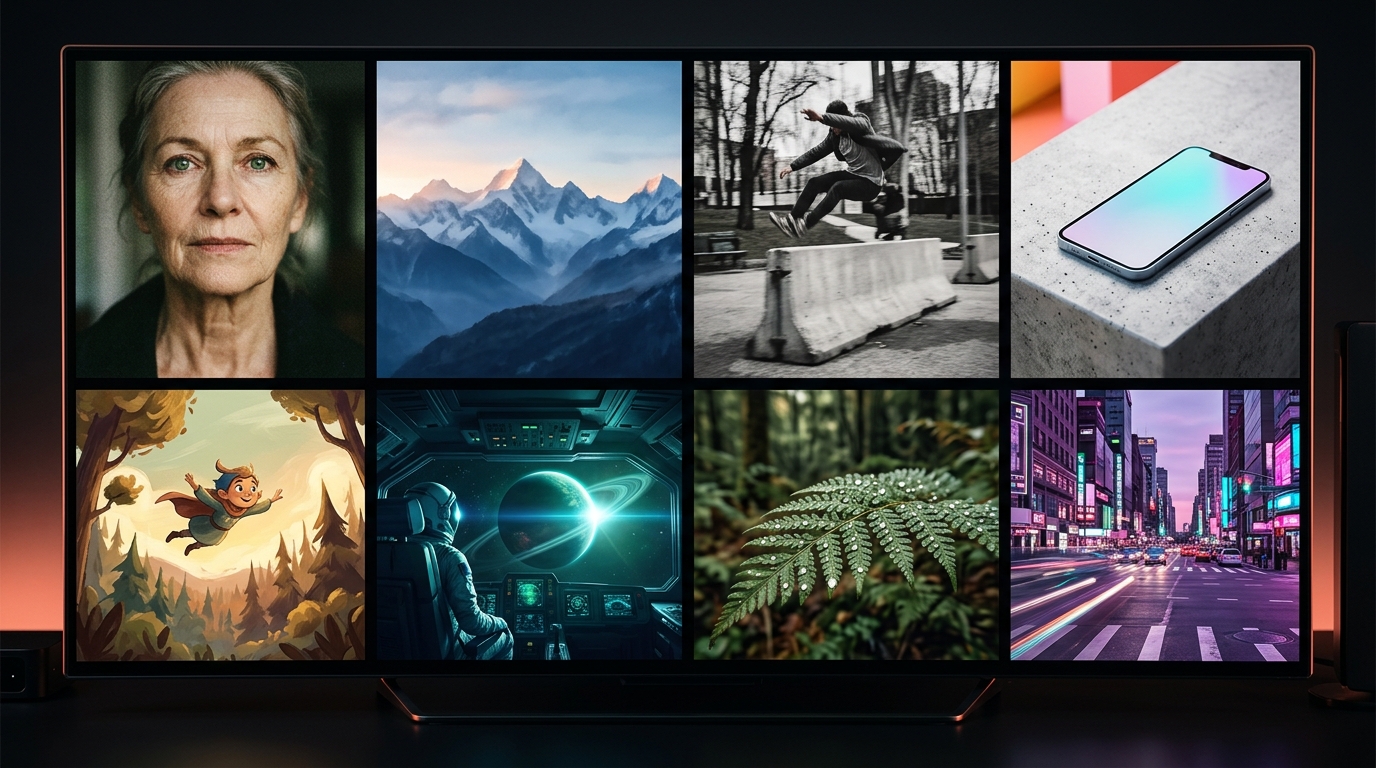
The AI video generation landscape in 2026 — each tool has a distinct visual signature
Best AI Short Film Generators in 2026: Complete Comparison
The AI video generation landscape has matured significantly. What started as novelty clips in 2023 has become a legitimate production pipeline for short films, brand content, and creative storytelling. But with so many tools available, choosing the right one matters more than ever - especially if you need characters that actually look the same from scene to scene.
This guide compares the 8 leading AI short film generators in 2026 across the metrics that matter: character consistency, video quality, multi-scene support, pricing, and overall ease of use for filmmaking workflows.
Key takeaway: Character consistency is the single most important criterion - without it, multi-scene storytelling falls apart regardless of how good individual clips look.
Before diving into individual tools, here are the criteria that separate a toy from a production tool:
Character consistency - Can your protagonist look the same in scene 1 and scene 15? This is the single hardest problem in AI video and the reason most "AI films" look incoherent.
Multi-scene support - Can you build a narrative across multiple shots without starting from scratch each time?
Story-to-video pipeline - Can you go from a script or storyboard to finished output, or do you need to prompt each clip individually?
Video quality and resolution - Motion smoothness, visual fidelity, and output resolution.
Pricing and generation limits - Cost per minute of output, subscription tiers, and watermarking policies.
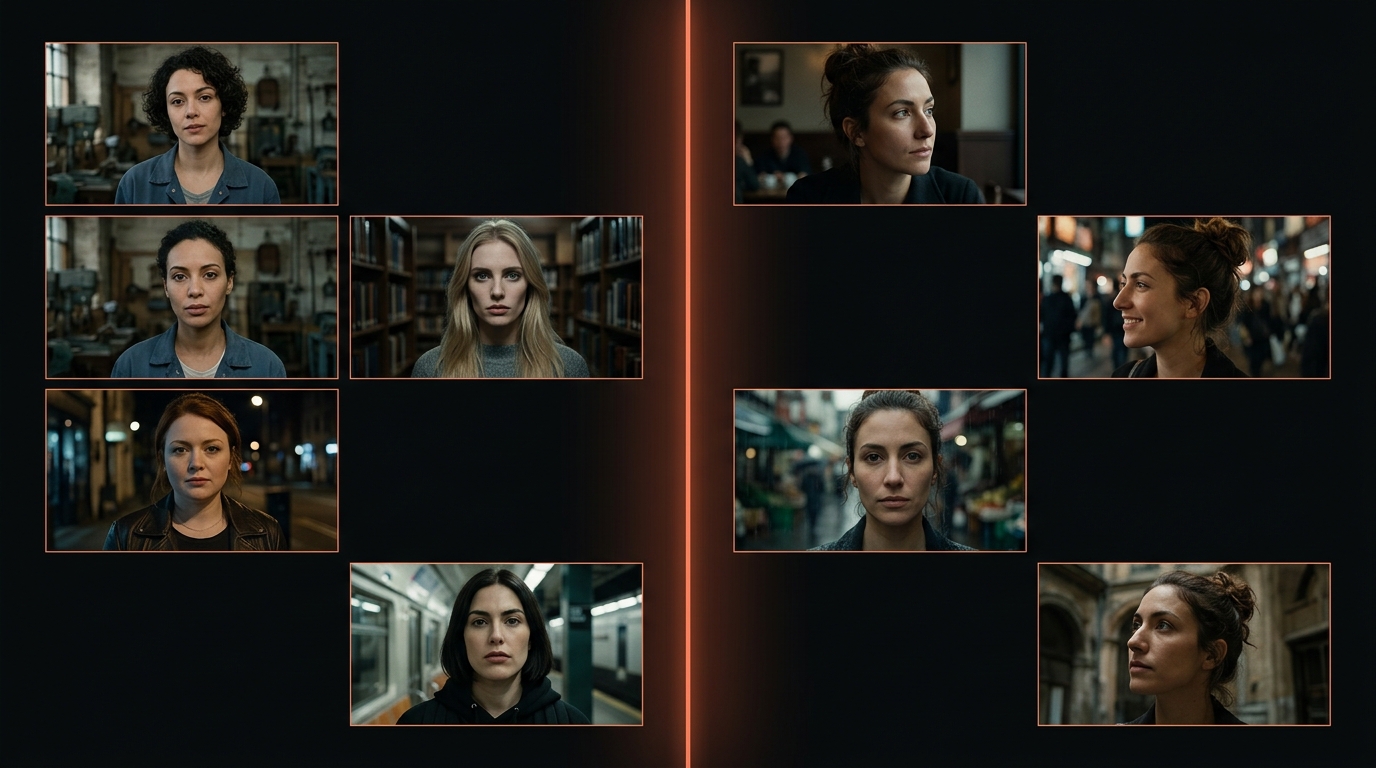
Character consistency comparison across AI tools
Character consistency scores across 8 major AI video generators in 2026
The 8 Best AI Short Film Generators Compared
Key takeaway: Only one platform - Artiroom - was purpose-built for multi-scene filmmaking with consistent characters; the rest are clip generators with varying degrees of workaround.
1. Artiroom
Best for: Character consistency and story-to-video workflows
Artiroom is purpose-built for AI filmmaking with consistent characters. Its Visual DNA system analyzes 40+ visual attributes of each character - from facial proportions and skin tones to clothing textures and lighting response - and preserves those attributes across every scene. Rather than treating each frame as an independent generation, Artiroom treats character identity as an architectural principle.
The platform offers a full story-to-video pipeline: write your script, define characters with Visual DNA profiles, generate a storyboard, and render scenes that maintain coherent character identities throughout.
Pros:
Industry-leading character consistency via Visual DNA
Full story-to-video pipeline from script to export
Multi-scene timeline with drag-and-drop reordering
Brand DNA system for maintaining visual style across projects
No per-generation watermarks on paid plans
Cons:
Newer platform, smaller community compared to Runway
Advanced features require paid subscription
Pricing: Free tier with 10 credits to start (one 480p scene video of up to 5 seconds to preview in the app); paid plans from a $9.99 one-time Starter pack or $29.99/month (Creator).
Character Consistency: Persistent identity profile (40+ attributes)
Best for: General-purpose AI video and motion design
Runway pioneered the commercial AI video space and Gen-3 Alpha Turbo remains a strong general-purpose tool. It excels at motion quality and offers robust editing features including inpainting, outpainting, and motion brush. However, character consistency across multiple scenes remains a well-documented weakness - the platform generates each clip independently with no native identity persistence mechanism.
User reviews frequently cite character inconsistency across generations
Pricing: Free tier with limited credits; Standard from $15/month; Pro from $35/month; Unlimited from $95/month.
Character Consistency: Reference image, per generation
3. Sora (OpenAI)
Best for: Photorealistic single-scene generation
OpenAI's Sora generates strikingly realistic single clips, especially for scenes involving real-world physics and natural motion. Its understanding of spatial relationships and object permanence within a single clip is among the best available. However, Sora currently provides no mechanism for maintaining character identity across separate generations, making multi-scene storytelling extremely difficult.
Pros:
Among the best single-clip realism available
Strong understanding of physics and spatial relationships
Pricing: Included with ChatGPT Plus ($20/month) with limited generations; Pro ($200/month) for higher volume.
Character Consistency: None
4. Kling (Kuaishou)
Best for: High-quality generation at competitive pricing
Kling has emerged as a strong value proposition in AI video. The visual quality is competitive with Runway and Sora, and the pricing is notably lower. Kling offers a face-lock feature that provides basic identity preservation, though it struggles with angle changes, lighting shifts, and outfit variations. For single-character, front-facing content, it works reasonably well.
Pros:
Strong video quality at lower price points
Face-lock feature for basic identity preservation
Up to 10-second generations
Good motion quality
Cons:
Face-lock breaks down with significant angle or lighting changes
Limited multi-scene support
Content moderation can be unpredictable
Interface primarily optimized for Chinese-language users
Pricing: Free tier with daily credits; Pro from $8/month; Premium from $28/month.
Character Consistency: Face lock (single subject)
5. Pika
Best for: Quick social media clips and stylized content
Pika focuses on accessible, fast generation for social media creators. It supports image-to-video, text-to-video, and video-to-video transformations. The latest version has improved motion quality, but character consistency remains a major gap - independent benchmarks have scored Pika at 1.4 out of 10 for identity preservation across scenes.
Pros:
Very fast generation times
Good for quick social media clips
Lip-sync feature for talking-head content
Accessible interface for beginners
Cons:
No mechanism for carrying a character's identity between generations
Limited to short clips
No multi-scene or storytelling tools
Noticeable artifacts in complex scenes
Pricing: Free tier; Standard from $10/month; Pro from $35/month.
Character Consistency: None
6. Luma Dream Machine
Best for: Cinematic single-shot quality
Luma's Dream Machine produces visually impressive single shots with cinematic quality. Camera movement and lighting are handled well, and the tool works from both text and image prompts. Like most competitors, it lacks any native character persistence system. Each generation is independent.
Pros:
Excellent cinematic quality per clip
Good camera movement simulation
Image-to-video produces strong results
Reasonable pricing
Cons:
No character consistency across clips
No multi-scene or timeline features
Occasional flickering in longer generations
Limited control over specific scene elements
Pricing: Free tier with watermark; Standard from $12/month; Pro from $36/month.
Character Consistency: None
7. LTX Studio
Best for: Storyboard-to-video workflows
LTX Studio takes a storyboard-first approach, allowing users to lay out scenes visually before generating video. This is useful for planning but doesn't solve the underlying character consistency problem - characters still drift between scenes. The interface is well-designed for filmmakers who think in sequences rather than individual prompts.
Pros:
Storyboard-first workflow
Good planning and pre-visualization tools
Multi-scene layout interface
Collaboration features
Cons:
Character consistency still limited despite storyboard structure
Video quality slightly behind Runway and Sora
Slower generation times
Smaller model compared to leading competitors
Pricing: Free tier with limited generations; Pro from $24/month.
Character Consistency: Reference image, per generation
8. Story2Vid
Best for: Automated narrative generation from text
Story2Vid focuses specifically on converting written stories into video sequences. You paste in a script and the system automatically segments it into scenes, generates prompts, and produces clips. It is a useful proof-of-concept for automated storytelling, but character consistency and visual quality lag behind dedicated video generators.
Pros:
Fully automated script-to-video pipeline
Automatic scene segmentation
Good for rapid prototyping of narrative concepts
Simple input workflow
Cons:
Lower visual quality than leading competitors
Character consistency is unreliable
Limited creative control over individual scenes
Still relatively early-stage
Pricing: Free beta; paid plans expected from $19/month.
Character Consistency: None
Comparison Table
| Tool | Character Consistency | Multi-Scene | Story Pipeline | Video Quality | Starting Price |
|------|----------------------|-------------|----------------|---------------|---------------|
| Artiroom | Persistent identity profile (40+ attributes) | Yes (Timeline) | Full pipeline | High | $29/mo |
| Runway | Reference image, per generation | Manual only | No | Very High | $15/mo |
| Sora | None | No | No | Very High | $20/mo |
| Kling | Face lock (single subject) | Limited | No | High | $8/mo |
| Pika | None | No | No | Medium | $10/mo |
| Luma | None | No | No | High | $12/mo |
| LTX Studio | Reference image, per generation | Storyboard | Partial | Medium-High | $24/mo |
| Story2Vid | None | Automated | Full (basic) | Medium | $19/mo |
Platform positioning: single-clip quality vs multi-scene support
How We Evaluated These Tools
Key takeaway: Each tool was tested with the same standardized tasks - a 5-scene short film, a 3-character dialogue scene, and a brand video - to ensure apples-to-apples comparison.
Each tool was tested with the same set of tasks: generating a 5-scene short film with a single protagonist, a 3-character dialogue scene, and a style-consistent brand video. Character consistency was scored by comparing facial features, body proportions, and clothing details across all generated scenes.
Video quality was assessed on motion smoothness, resolution, artifact frequency, and overall visual coherence. Pricing was compared at the tier necessary to produce watermark-free, high-resolution output.
Key takeaway: Your decision should be driven by whether you need characters appearing across multiple scenes - if you do, character consistency is non-negotiable.
Your choice depends on your primary use case:
If character consistency is critical (short films, series, brand mascots): Artiroom is the clear leader. Visual DNA solves the identity problem that every other tool struggles with.
If you need the highest single-clip quality and don't need multi-scene consistency: Sora or Runway produce the most impressive individual clips.
If you're budget-conscious: Kling offers strong quality at the lowest price point, though with trade-offs on consistency.
If you're making quick social content: Pika is fast and accessible, though not suitable for narrative work.
If you want a storyboard workflow: LTX Studio provides good planning tools, even if consistency isn't fully solved.
For anyone making AI short films - content with characters, narrative arcs, and multiple scenes - character consistency isn't a nice-to-have. It's the difference between a coherent story and a confusing collage. That's the gap Artiroom was built to close.
Key takeaway: Single-clip generation is largely solved - the frontier has moved to multi-scene coherence, character persistence, and narrative structure.
The industry is converging on a clear truth: single-clip generation is largely solved. The frontier problems are now multi-scene coherence, character persistence, and narrative structure. Expect every major player to announce character consistency features in 2026 and 2027 - but the architectural approaches will vary significantly in effectiveness.
Tools that bolt consistency onto existing frame-by-frame architectures will continue to struggle. Tools that build identity preservation into the generation pipeline from the ground up - like Artiroom's Visual DNA - will have a structural advantage.
The Bottom Line
Summary: In 2026, Artiroom leads AI short film generation with its Visual DNA character consistency system and full story-to-video pipeline, storing one reusable identity profile per character where competitors offer at most a per-generation reference image - making it purpose-built for coherent multi-scene AI filmmaking.